Conversation with Sara Woods
GPDGW: A Monthly Bloom Interview Series
Authentic conversations with leaders from the Bloom Neighborhood showcasing snapshots of challenges and practitioner-focused insights
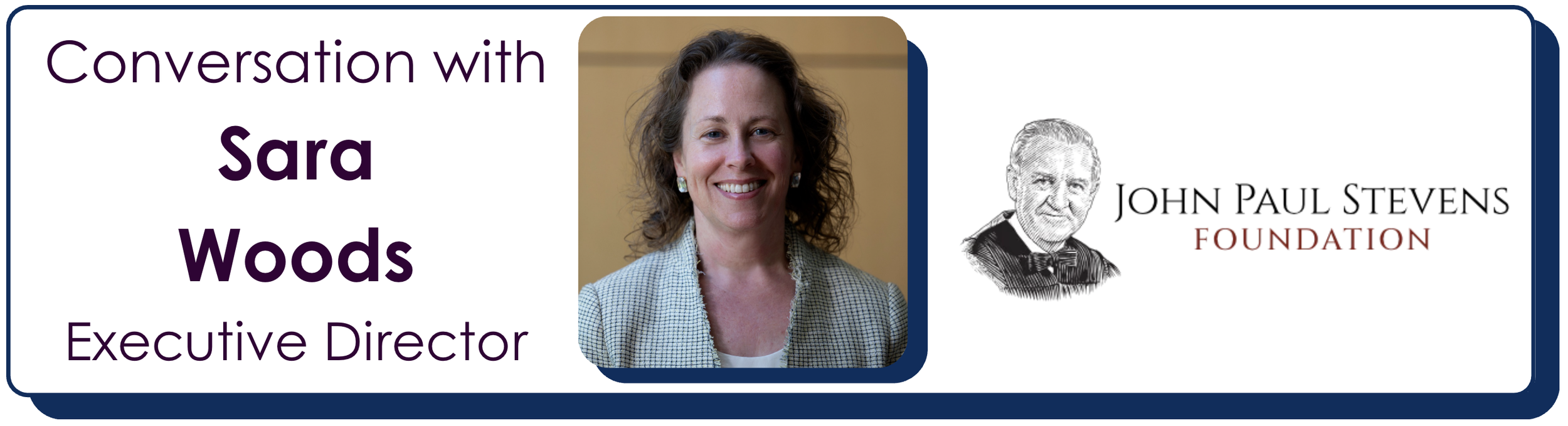
Sara Woods is the Executive Director of The John Paul Stevens Foundation. Prior to joining The Foundation, Sara was co-leader with (now CEO) Sean Vereen at Heights Philadelphia, an “economic mobility catalyst” that “connects Philly youth to careers and college with a network of people who believe – and invest – in their talents.” Prior to her role at Heights, Woods was the President and CEO of Philadelphia Futures.
What’s top of mind for you today?
Like most nonprofit leaders, it’s financial sustainability. How are we ensuring that we have the dollars we need to meet our mission, particularly at a time when it's challenging for so many people to pay their bills and meet their basic human needs?
It adds a layer of empathy that is necessary for the folks we work with. How do we show up in a way that is human-centered in everything we do? Because when we get that right, not only are others inspired to give their best, but it helps us make the right decisions.
What was an early experience that shaped who you are as a leader?
A big leadership moment came from my father when I was 13 years old and I joined him at his company picnic. Working in a very small community in Iowa, my dad was really trying to win folks over, as any good leader does.
That day I arrived with a surly teenage attitude. Frankly, I wasn’t very nice to the folks I met. On the drive home to West Des Moines, my dad talked to me about how you must show up, even in the hard times, in a way that respects the people around you. I can still feel the emotions of that car ride when he said, ‘I was so embarrassed. I was really counting on you. You are not better than anyone in that picnic. How you show up matters.’
That day will stay in my heart forever. That lesson was transformative for me, and it has become the cornerstone of my leadership.
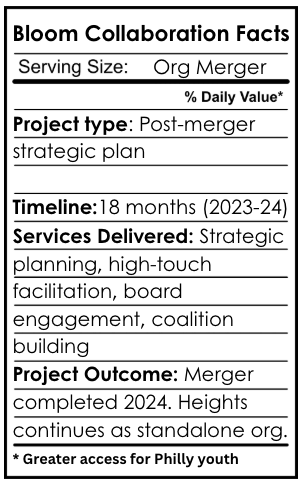
How did your co-leadership journey with (current Heights CEO and former co-CEO) Sean Vereen come to be?
Sean and I met to talk about how we could collaborate. Sean led with ‘yes, we're better doing this together.’ We had no idea what was going to follow.
I’m incredibly proud of the impact we can point to from that first conversation. Heights now serves over 4,000 students annually, and we spearheaded a co-leadership model that may help others see what’s possible when all responsibility does not rest on a solo leader.
Sean and I have had very different life experiences, which influenced how we showed up in this partnership. However, having led very similar organizations, and being mission-aligned leaders, we were able approach partnership from a people-centered, student-first mindset.
What did the merger process actually look like?
(Laughing) It was messy! Before we even decided to merge, we had to answer: Could we work together? There was a moment where Sean and I finally had to say, we are doing this, and there is no turning back.
It’s like when Princess Diana wanted to back out of getting married to Prince Charles, and her sisters said, ‘Well, bad luck, Duch, your face is on the tea towels so you're too late to chicken out.’ It was the same for us. We were doing it. And what a cliff it felt like we were standing on. We were bringing two storied educational institutions together. I remember thinking, ‘We are hitched at the hip, and so many kids are counting on us. We gotta do this right.’ It was heavy, and thank goodness I had a partner in it.
How did you strengthen your connection as co-leaders?
We did joint coaching sessions. I had my own coach at that time, which I believe is such good practice as a leader. When we agreed to merge, our board said, ‘If this is going to work, you've got to keep the coaching.’ Sean and I met with our dyad coaches for the entire three years of our partnership.
Sean and I developed the partnership, and we learned how to collaborate with each other, our leadership team, our board, and staff, all of which was happening simultaneously. It was fascinating.
We assessed our leadership styles and we came up with a co-leadership philosophy, which was a beautiful reminder of the value of being a people-first leader. I feel deeply that making decisions with people at the center makes us do our work better. And while it showed up differently in Sean, it was clear that we both shared that value.
I was a solo ED for 15 years before this, so in some ways it was a very familiar experience. But after having done this collaboratively with Sean, I'm a better solo leader now. That experience helped me recognize the brilliance each member brings. It helped me understand how we lift each other up and lead together. And, it helped me identify when I just have to make the call.
How do you respond to fear and uncertainty in your leadership?
I was fortunate to take a sabbatical before starting my current leadership role at John Paul Stevens Foundation. That experience reminded me of the importance of getting outside in nature, and of fostering community.
How do we all do this work in the hard moments, when fear and uncertainty take over? For me, it’s been about leveraging the people around me. I go on walks with others. It’s the human connections that keep me grounded to make the hard decisions.
Recently, I was struggling with a sticky issue, and I texted a wonderful friend and collaborator at 6:30 in the morning with, ‘I don't know what to do here, can you talk?’ And she responded right away. We talked through it, and she helped me work it out.
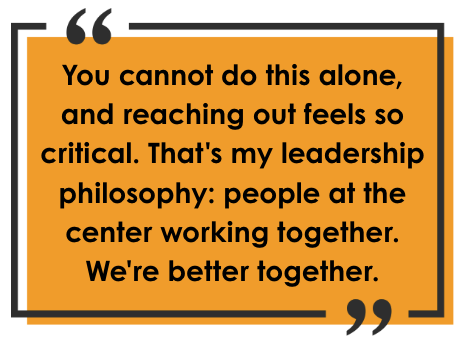
You cannot do this alone, and reaching out feels so critical. That's my leadership philosophy: people at the center working together. We're better together.
How do you bring out the best in your team?
As Executive Director, I am challenged to lean on our team and bring out all of their strengths. I’ve been fortunate to have had incredible teammates. I think about the chief of staff at Heights, who has remarkable ways of creating structure out of (what seemed like) chaos. Another colleague always brought it back to (A) data – how are we measuring what we're doing, and also, (B) what is the student experience going to be, and how are we making decisions based on that?
I feel like everybody just wants to be heard. So how are we listening? How are we listening to a team member who we know can get to a higher level? What's the blocker? What are the questions that we can ask in a strengths-based way? What could it look like if you had a magic wand to remove those barriers? What do you need in this moment?
How do you spot red flags before a problem becomes unwieldy?
The day I arrived at a former role, everyone who came to my office cried, one by one. It was huge red flag that pointed to urgent culture issues. Addressing situations like that has been my sweet spot. We were able to transform that organization, and it was wonderful and joyous.
However, I haven’t always had accurate foresight. There have been times I’ve invested so much energy into an employee’s potential, but it ends up not being a right fit. Hindsight has been my teacher in those instances.
Bonus Question: Who is your DIVA?
My mind immediately goes Amy Poehler. She's fun, funny, and super smart. I appreciate the relationships she has with other comedians and actresses, and I love her podcast.
