

GPDGW: A Bloom Interview Series
Authentic conversations with leaders from the Bloom Neighborhood showcasing snapshots of challenges and practitioner-focused insights

Carol Austin is Executive Director of First Up, a nonprofit organization that has supported early childhood education professionals, organizations, and families for nearly 60 years. First Up strengthens program quality through child care teacher and director training initiatives. Carol is a lifelong educator and has dedicated her career to early childhood education success.
What is inspiring you these days in your work, in your life, or both?
I'm inspired by seeing young people find their voice and starting to speak up and speak out about things that have not been working for a while, and things that have been inflexible in our society. I'm inspired to see younger people become advocates.
These last several years have been tough. But it really is inspiring to see that happen. There's a bit of a new world order being ushered in.
Thinking in new ways and experiencing life in ways that are going against the grain, going against the status quo. I'm seeing that from the younger generation which, in a sense, feels appropriate because this is their world and they are the future.
Has seeing younger people become more activist empowered you to find or share your voice in a different way?
I do experience a lot of people who are very skeptical about the new generation, and maybe not very positively. For me, I’ve shifted because I think I've come to the realization that some of what we're experiencing is a push against all of the systems and structures that haven't really worked for people.
We're in an interesting phase, where people's needs aren't being met, but the resistance and the vocalization of it is inspiring to me.
What’s a key career moment, or an early life moment that has informed who you are as a leader today?
I was very fortunate when I first started out my career. During the summer between college and graduate school, a friend called me up and said, ‘there's this opportunity to run a summer youth jobs program for an organization, and I think you should check it out.’ It was revolutionary, because leading that program really set me on the pathway of being in the education world, and towards leading high school education reform.
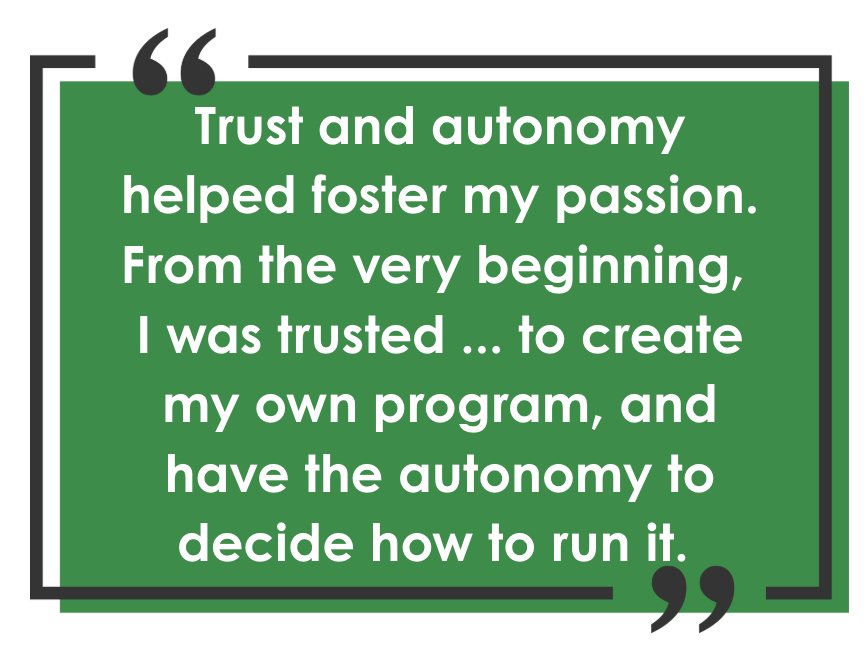
I found my passion, yet it was trust and autonomy that helped foster that passion. From the very beginning, I was trusted. I loved being able to create my own program, and to have the autonomy to decide how to run it.

Both today and from the very beginning, what I really value is bringing people in who can do the work, and then letting them do the work. That level of trust is really important.
How does ‘trust in others’ - the same trust you were given in that summer youth jobs program - show up in the ethos of your leadership style?
One thing people have had to learn about me as a leader is, I share. It's not always a mandate, it's not always a finished product, so, I'm not saying you have to do it. But I'm giving you more information that I've been thinking about.
I'm really working on trying to ask more questions. I don't inspect or micromanage, I prefer to hear the high points and ask, ‘how is that working?’
How do you approach challenges as a leader today?
First Up is a learning organization. So we embrace failure and challenges as opportunities to learn and grow. That's the culture that I'm interested in cultivating. Not a culture of perfection, not a culture where you always have to get things right, but a culture of learning...from everything.
Challenges are an opportunity to bring in new ideas as well as a chance to reflect on what hasn’t worked and how we can do things differently.
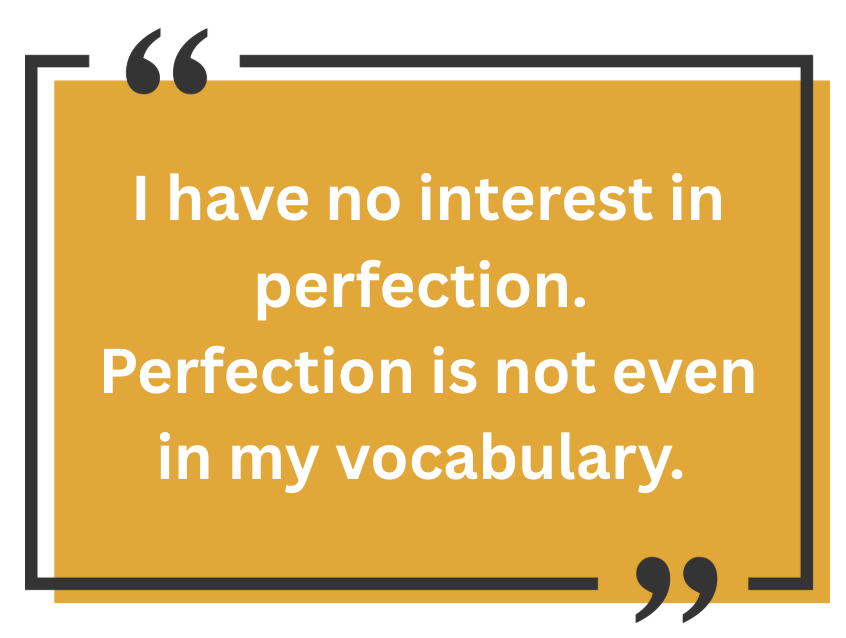
I also truly believe that failure is one of the biggest opportunities to be able to grow. I have no interest in perfection. Perfection is not even in my vocabulary. It's a waste of time. It's the impossible. It makes us focus on the stuff we shouldn't focus on. It takes a lot more to get to the next level when you fail at something. Failure is not an opportunity to complain and wonder and beat yourself up. That never produces much.
How do you find support among peers?
I'm part of a number of leadership networks that I can call on and say, ‘Do you know someone who does XYZ? How should I think about this?’ I'm starting to leverage and appreciate that I have so many resources around me. I'm starting to think, ‘who can I call about this?’ Which I never used to do, it was just me.
Being able to say, who can I go to that can support me in thinking about this conversation? And simultaneously, as I'm trying to get more out of my head, it's helpful. It's very freeing. I love that. I can pick up the phone, make a call, or send an email, saying, ‘can we talk for 5 minutes? I need thought partnership on X, Y, or Z.’
Does that free you from being stuck in your head?
It saves me from being stuck in my head, and things move so much faster! There's so much trickiness going on in our heads. If I can just have a conversation with a couple of people, it will provoke new thoughts, new ideas, and I can take action, with greater velocity.
Bonus Question: Who’s your DIVA?
My faith has always been central to me. I don't know that there is a specific person, per se. But I would say that when I try to center myself, I try to just pray and see what comes. Faith is a major part of my life. So my diva might just be Jesus.
